Scenes · 10
动物与森林Animals & the Forest
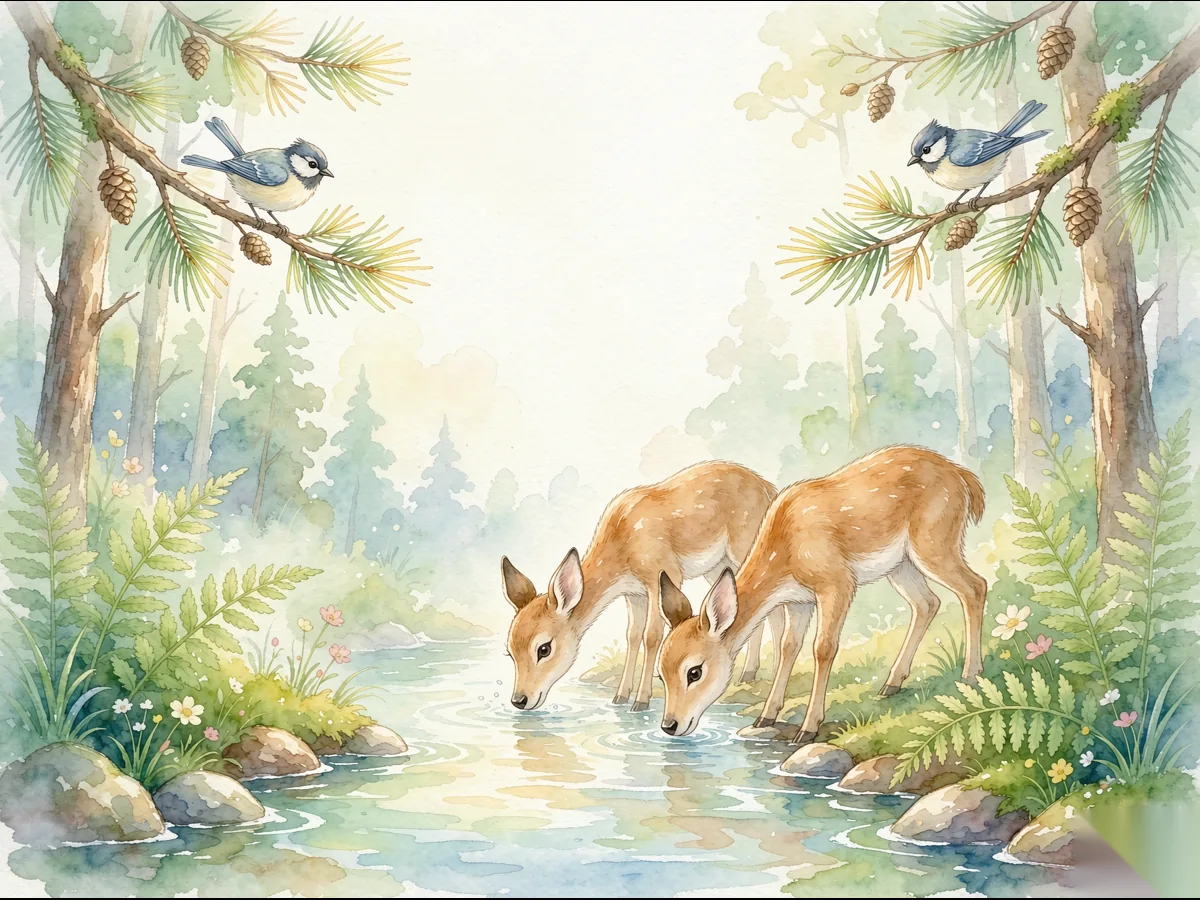
Four seasonal forest scenes about animals, observation and living alongside nature.
Scene dialogues
01树林里慢慢走A Slow Walk in the WoodsHSK 3
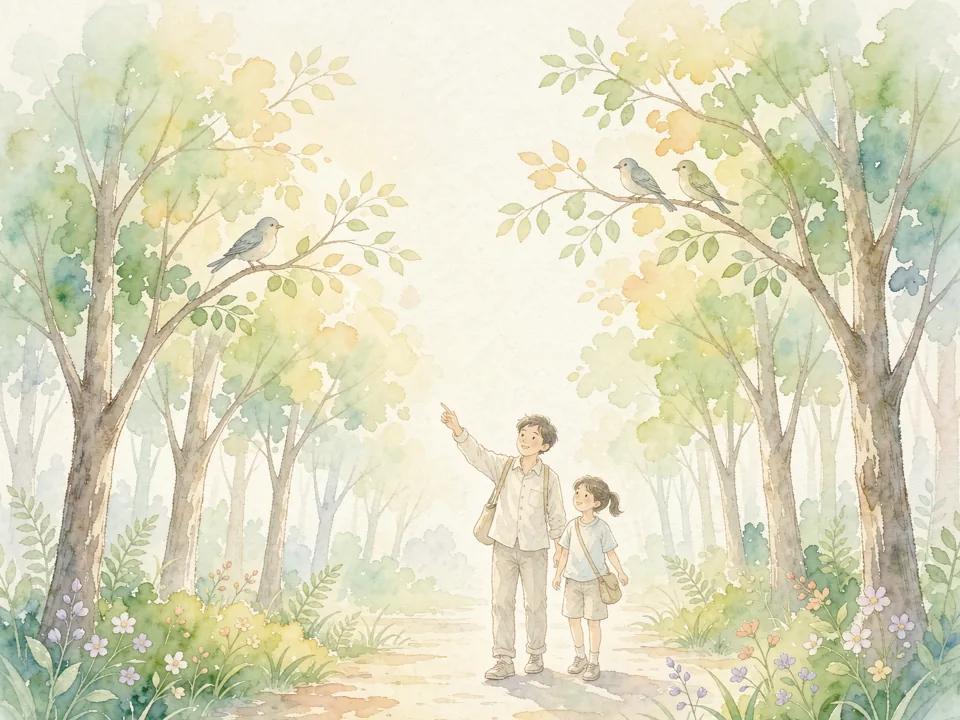
duì , zhè shì xiǎo shù lín 。 wǒ men màn màn zǒu 。
Yes, it's a little wood. Let's walk slowly.
wǒ kàn jiàn le 。 bié pǎo , xiǎo xīn jiǎo xià 。
I see it. Don't run — watch your step.
02绕开树枝扶起小树Around the Branch, Lift the SaplingHSK 5
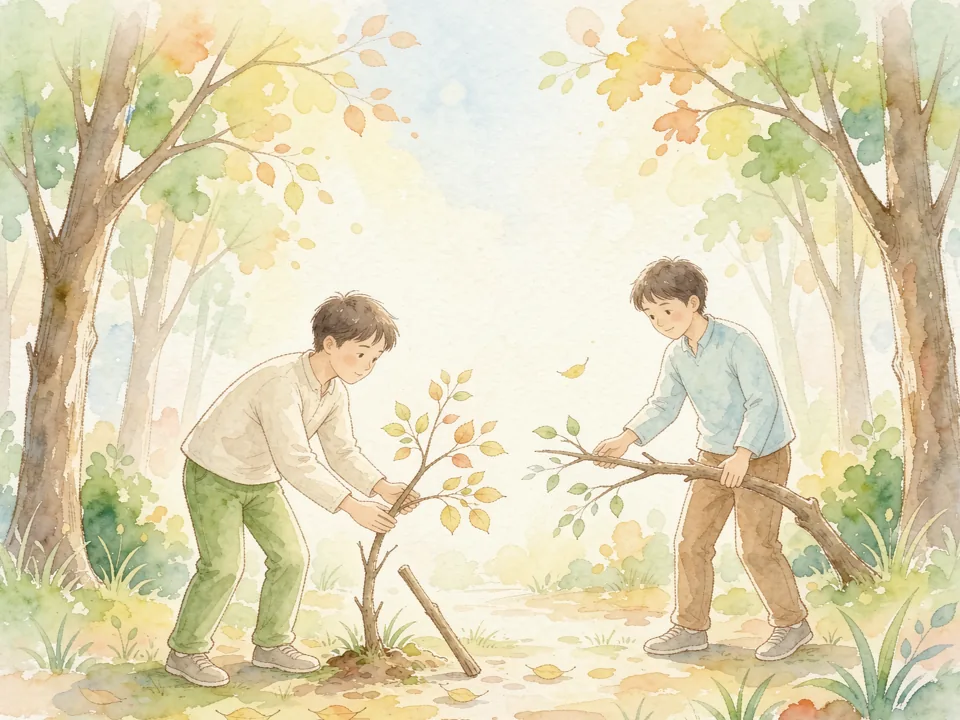
wǒ kàn jiàn le 。 nǐ xiān bié guò qù , wǒ bǎ shù zhī tái qǐ lái 。
I see it. Don't go yet — I'll lift the branch.
tái qǐ lái le 。 nǐ màn màn zǒu , bié cǎi dào shù gēn 。
There, it's up. Walk slowly, and don't step on the roots.
tā pǎo dé tài kuài le 。 nǐ bié zhuī , zhuī bú shàng de 。
It was too quick. Don't chase it — you'd never catch it.
kě néng shì zuó tiān fēng dà , bǎ tǔ chuī sōng le 。
Maybe yesterday's wind loosened the soil.
hǎo 。 nǐ fú zhe shù gàn , wǒ gěi gēn bù jiā diǎn tǔ 。
All right. You hold the trunk, I'll add some soil around the roots.
zhī dào le 。 zài jiāo diǎn shuǐ , tā jiù néng zhàn zhù le 。
I know. A little more water and it'll stand firm.
Words · 6
03沿着足迹认林子Reading the Forest by Its TracksHSK 6
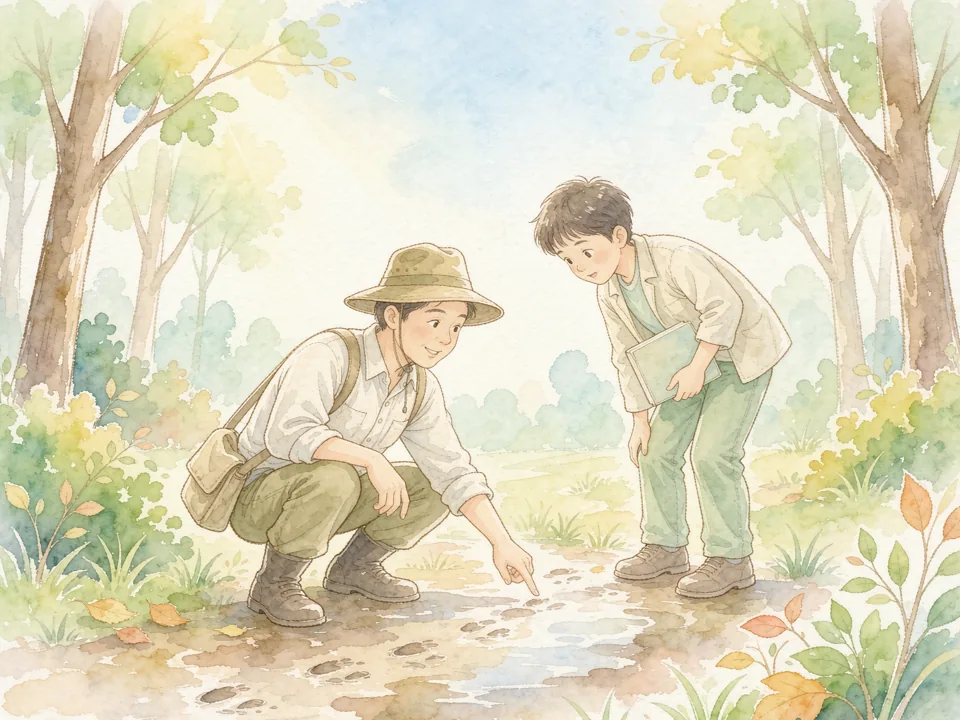
duì , shù guān bǎ guāng dǎng zhù le , suǒ yǐ dì shàng yì zhí hěn cháo shī 。
Right — the canopy blocks the light, so the ground stays damp.
wǒ dūn xià lái kàn kàn … … kàn bú tài qīng , bú guò cóng xíng zhuàng pàn duàn , duō bàn shì sōng shǔ 。
Let me crouch down and see… It's not very clear, but judging by the shape, most likely a squirrel.
bié zhuī 。 yuè wǎng lǐ zǒu yuè huá , ér qiě jīng rǎo le dòng wù fǎn ér bù hǎo 。
Let's not. The deeper you go, the more slippery it gets — and disturbing the animals does more harm than good.
先别动手。既然巢里没有雏鸟,就把它放回原来那根枝上,别挪远。
xiān bié dòng shǒu 。 jì rán cháo lǐ méi yǒu chú niǎo , jiù bǎ tā fàng huí yuán lái nà gēn zhī shàng , bié nuó yuǎn 。
Don't touch it yet. Since there are no chicks in it, let's put it back on the very branch it came from — not somewhere else.
jì xià lái ba 。 bù jǐn jì wèi zhì , lián rì qī hé tiān qì yě xiě shàng , xià cì hǎo duì bǐ 。
Do. Note not just the spot — put down the date and the weather too, so we can compare next time.
xiǎng dé zhōu dào 。 jí shǐ méi rén kàn jiàn , yě dé bǎ lā jī dài chū lín zi 。
That's thoughtful. Even if no one's watching, we still carry our rubbish out of the woods.
Words · 6
04窗台上的小客人 · 认一认Little Visitors at the Window · Naming ThingsHSK 5Early morning at home: a child and Grandma look from the windowsill towards the small wood behind the house. They name a sparrow and a squirrel, count them, and learn the rule of watching without disturbing.
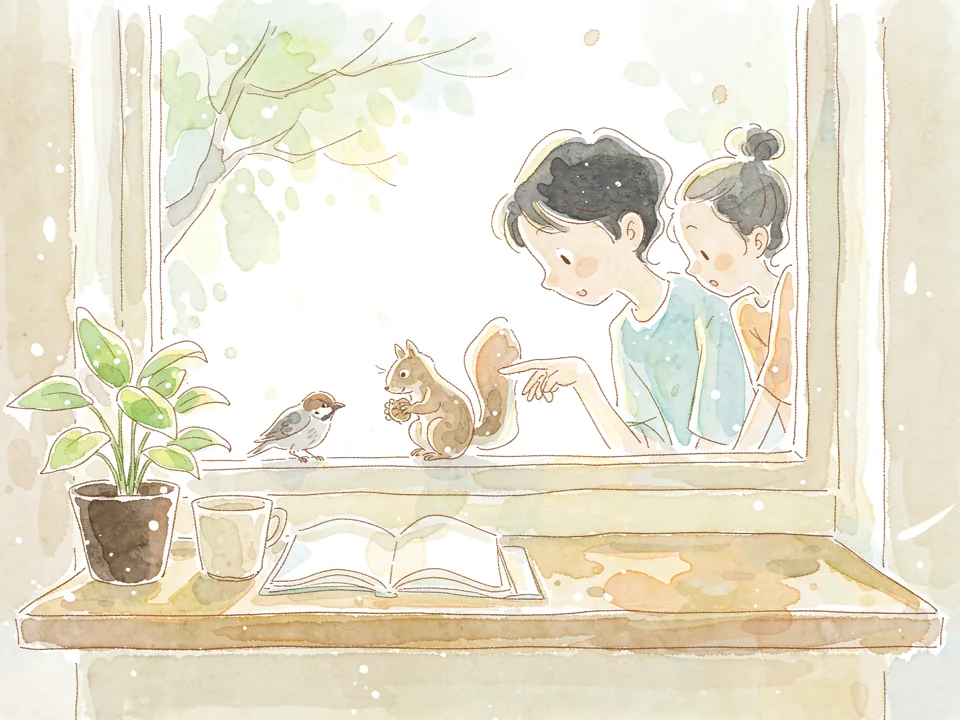
nà shì má què 。 tā hěn xiǎo , yǔ máo shì huī sè de 。
That is a sparrow. It is small, and its feathers are grey.
duì 。 shù shàng yǒu liǎng zhī má què , hái yǒu yì zhī sōng shǔ 。
Yes. There are two sparrows in the tree, and one squirrel too.
tā zài chī sōng guǒ 。 wǒ men xiǎo shēng yì diǎn , bié xià dào tā 。
It is eating a pine cone. Let us speak quietly, so as not to startle it.
zài nà kē shù shàng 。 zhī kàn , bù mō , yě bú yào wèi 。
In that tree. Look only: do not touch it, and do not feed them.
Words · 6
05林子里的一年 · 观察与不打扰A Year in the Woods · Watching Without DisturbingHSK 6At the school nature club, a pupil and the teacher look back over a year of observation notes from the small wood behind the school: nest-building, moulting, falling leaves and fruit left on the branches for winter. The class learns its three rules — do not feed, do not take eggs, do not move nests.
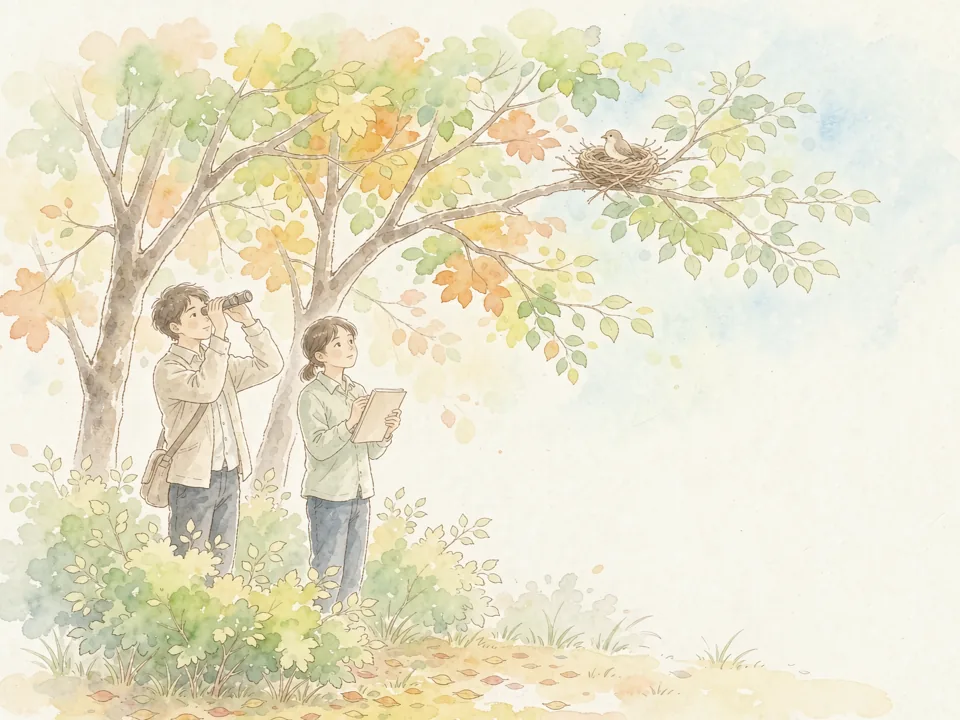
xiān kàn sān yuè nà yí yè 。 nǐ men jì xià le shén me ?
Let us look at the March page first. What did you write down?
hěn hǎo 。 sì yuè ne ? wō lǐ yǒu niǎo dàn le ma ?
Very good. And what about April? Were there eggs in the nest by then?
wèi shén me bù néng jiǎn qǐ lái kàn ne ?
And why must we not pick one up to look at it?
duì 。 wǔ yuè , chú niǎo cháng chū le yǔ máo 。 liù yuè , tā men gēn zhe mǔ niǎo fēi zǒu le 。
Exactly. In May the chicks grew their feathers. In June they flew off with the mother bird.
dōng tiān nǐ men zài shù shàng liú le guǒ zǐ , zhè jiàn shì wǒ jì de hěn qīng chǔ 。
In winter you left fruit on the trees. I remember that very clearly.
Words · 6
06护林员与旧照片 · 山林的记性The Ranger and an Old Photograph · What the Hills RememberHSK 6At a nature reserve visitor centre, an old photograph from 1996 hangs on the wall. A ranger who has worked here for nearly thirty years tells a visiting student about hillside closure, camera traps and the return of wildlife — and about the years when his father cut timber on the same slopes.
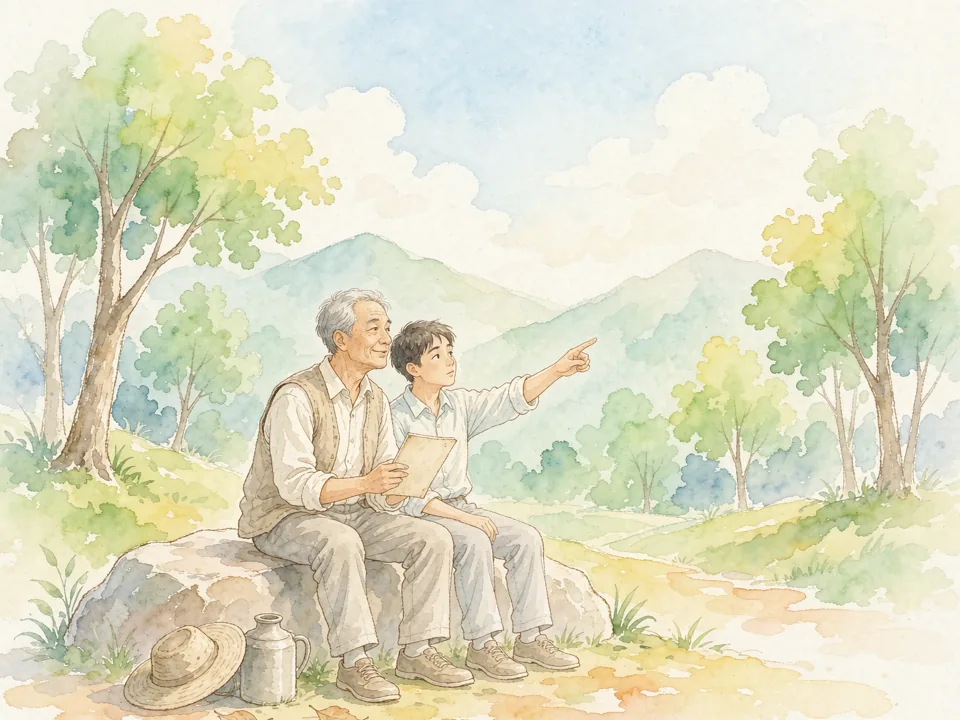
这张照片摄于一九九六年。那时候山上刚封育,树还没长起来,坡上几乎全是草。
zhè zhāng zhào piàn shè yú yī jiǔ jiǔ liù nián 。 nà shí hòu shān shàng gāng fēng yù , shù hái méi cháng qǐ lái , pō shàng jī hū quán shì cǎo 。
This photograph was taken in 1996. At that time the hills had only just been closed for regeneration; the trees had not grown back yet, and the slopes were almost entirely grass.
是真的。他年轻时是伐木工,每天天不亮就上山,把伐下的木头顺着山路运下来。
shì zhēn de 。 tā nián qīng shí shì fá mù gōng , měi tiān tiān bú liàng jiù shàng shān , bǎ fá xià de mù tou shùn zhe shān lù yùn xià lái 。
It is true. In his younger days he was a logger: before daybreak he would go up the mountain and bring the felled timber down along the mountain path.
一来是水土保不住,二来是林子里的鸟兽一年比一年少。一九九八年前后,这一带停止了天然林采伐。
yì lái shì shuǐ tǔ bǎo bú zhù , èr lái shì lín zi lǐ de niǎo shòu yì nián bǐ yì nián shào 。 yī jiǔ jiǔ bā nián qián hòu , zhè yí dài tíng zhǐ le tiān rán lín cǎi fá 。
For one thing, the soil and water could no longer be held in place; for another, the birds and beasts in the wood grew fewer year by year. Around 1998, logging of natural forest ceased in this area.
与其说换了工作,不如说换了一样东西:我从伐木队转到管护站,从此每天照旧上山,只是不再带斧头,而是带相机和记录本。
yǔ qí shuō huàn le gōng zuò , bù rú shuō huàn le yí yàng dōng xī : wǒ cóng fá mù duì zhuǎn dào guǎn hù zhàn , cóng cǐ měi tiān zhào jiù shàng shān , zhǐ shì bú zài dài fǔ tóu , ér shì dài xiàng jī hé jì lù běn 。
Rather than saying I changed jobs, it would be truer to say I changed one thing: I moved from the logging crew to the protection station. From then on I still went up the mountain every day as before, only I no longer carried an axe, but a camera and a notebook.
对。把它固定在兽径旁,动物经过时会自动拍下。这些年拍到过狍子、獾,前年还拍到一只金钱豹。
duì 。 bǎ tā gù dìng zài shòu jìng páng , dòng wù jīng guò shí huì zì dòng pāi xià 。 zhè xiē nián pāi dào guò páo zǐ 、 huān , qián nián hái pāi dào yì zhī jīn qián bào 。
Yes. We fix it beside a game trail, and it takes a picture automatically when an animal passes. Over the years it has recorded roe deer and badgers, and the year before last, a leopard as well.
连豹子都回来了,实在让人想不到。可照片里那片光秃秃的坡,如今究竟成了什么样子?
lián bào zi dōu huí lái le , shí zài ràng rén xiǎng bú dào 。 kě zhào piàn lǐ nà piàn guāng tū tū de pō , rú jīn jiū jìng chéng le shén me yàng zi ?
Even the leopard has come back; that is truly hard to imagine. But that bare slope in the photograph — what has become of it today, after all?
请随我到窗边来。三十年前父亲伐过的那面坡,如今已是林子最密的地方;他放下斧头那一年,我刚好接过了记录本。林子比人记性好,只要不打扰,它自己会把该回来的都带回来。
qǐng suí wǒ dào chuāng biān lái 。 sān shí nián qián fù qīn fá guò de nà miàn pō , rú jīn yǐ shì lín zi zuì mì de dì fāng ; tā fàng xià fǔ tóu nà yì nián , wǒ gāng hǎo jiē guò le jì lù běn 。 lín zi bǐ rén jì xìng hǎo , zhǐ yào bù dǎ rǎo , tā zì jǐ huì bǎ gāi huí lái de dōu dài huí lái 。
Please come with me to the window. The slope my father logged thirty years ago is now the thickest part of the whole wood; the year he laid down his axe was the very year I took up the record book. A wood remembers better than a person does: so long as we do not disturb it, it will bring back everything that belongs here.
Words · 6
07森林与人的分寸 · 共生之辩Where the Forest Ends · A Debate on Living TogetherHSK 7At a study forum round table, a moderator and an ecologist open with Mencius on taking timber in due season and Bai Juyi's poem about a nestling awaiting its mother. From there they weigh ecological corridors, human–wildlife conflict, invasive alien species and urban rewilding, and close by asking what sort of wood, and what sort of table, ought to be left to the next generation.
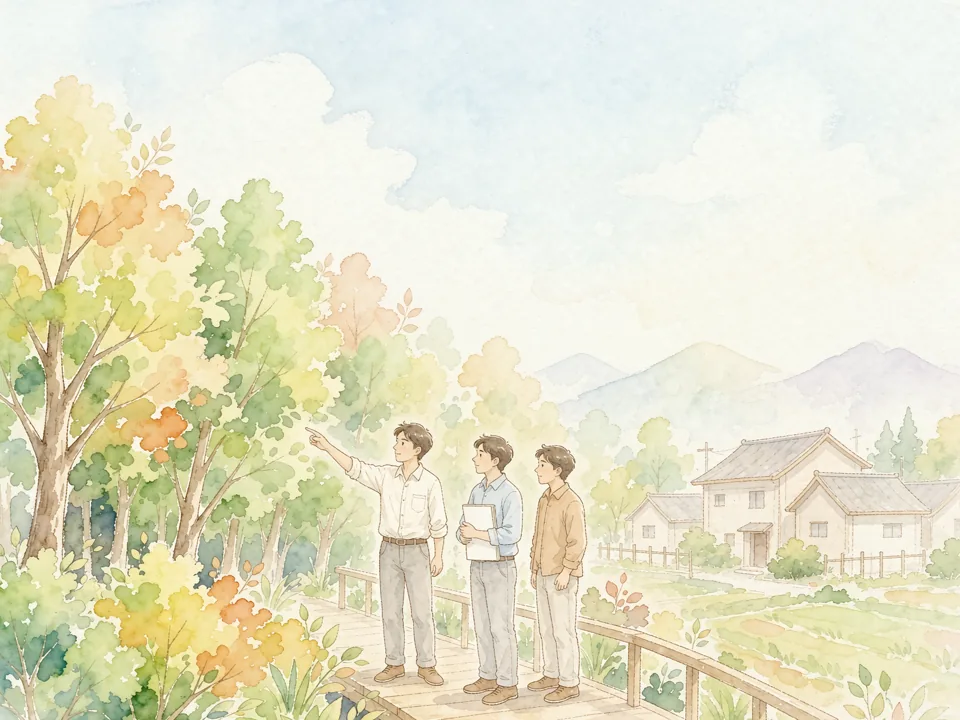
今天这场论坛,我想从《孟子·梁惠王上》的一句话说起:「斧斤以时入山林,材木不可胜用也。」请注意「以时」二字——它不是不许砍,而是按季节砍。想请教您:放在今天,这句话还算不算一种分寸?
jīn tiān zhè chǎng lùn tán , wǒ xiǎng cóng 《 mèng zǐ · liáng huì wáng shàng 》 de yí jù huà shuō qǐ : 「 fǔ jīn yǐ shí rù shān lín , cái mù bù kě shèng yòng yě 。 」 qǐng zhù yì 「 yǐ shí 」 èr zì — — tā bú shì bù xǔ kǎn , ér shì àn jì jié kǎn 。 xiǎng qǐng jiào nín : fàng zài jīn tiān , zhè jù huà hái suàn bu suàn yì zhǒng fēn cùn ?
I should like to open this forum with a line from Mencius: "Axes and hatchets enter the hills only in due season, and the timber will never be used up." Note the words "in due season" — this is not a ban on felling, but felling that keeps to the season. May I ask you: does that still count as a sense of measure today?
赵岐注得明白:「时,谓草木零落之时。」古人讲的是取之有度,不是取之有禁;把「以时」译成「在合适的季节」不难,译成「让林子缓得过来的节律」才难。今天我们把它换成生态承载力和休养生息,意思没有变,尺度却从一面山坡变成了几十年的监测数据。
zhào qí zhù dé míng bái : 「 shí , wèi cǎo mù líng luò zhī shí 。 」 gǔ rén jiǎng de shì qǔ zhī yǒu dù , bú shì qǔ zhī yǒu jìn ; bǎ 「 yǐ shí 」 yì chéng 「 zài hé shì de jì jié 」 bù nán , yì chéng 「 ràng lín zi huǎn dé guò lái de jié lǜ 」 cái nán 。 jīn tiān wǒ men bǎ tā huàn chéng shēng tài chéng zài lì hé xiū yǎng shēng xī , yì sī méi yǒu biàn , chǐ dù què cóng yí miàn shān pō biàn chéng le jǐ shí nián de jiān cè shù jù 。
Zhao Qi's commentary is plain: "The season means the time when grasses and trees shed their leaves." The ancients spoke of taking with measure, not of banning taking altogether. It is easy to render "in due season" as "at the right time of year"; it is far harder to render it as "the rhythm by which a wood can recover". Today we have translated it into carrying capacity and a period of rest: the meaning has not changed, but the scale has shifted from a single hillside to decades of monitoring data.
可白居易《鸟》走的是另一条路:「劝君莫打枝头鸟,子在巢中望母归。」他不计算能用多少,只把巢里那只等母鸟的雏鸟放到人面前。前者是制度的分寸,后者是恻隐的分寸;今天的保护立法与课堂教育,恰好还是这两条腿走路。
kě bái jū yì 《 niǎo 》 zǒu de shì lìng yì tiáo lù : 「 quàn jūn mò dǎ zhī tóu niǎo , zǐ zài cháo zhōng wàng mǔ guī 。 」 tā bú jì suàn néng yòng duō shǎo , zhī bǎ cháo lǐ nà zhī děng mǔ niǎo de chú niǎo fàng dào rén miàn qián 。 qián zhě shì zhì dù de fēn cùn , hòu zhě shì cè yǐn de fēn cùn ; jīn tiān de bǎo hù lì fǎ yǔ kè táng jiào yù , qià hǎo hái shì zhè liǎng tiáo tuǐ zǒu lù 。
Bai Juyi's poem "The Bird", however, takes another road: "Do not strike the bird upon the bough; its young in the nest are waiting for their mother to come home." He does not calculate how much may be used; he simply sets the nestling waiting for its mother before our eyes. The one is the measure of institutions, the other the measure of compassion. Conservation law and classroom teaching today still walk, as it happens, on these same two legs.
诚然,两条腿也会打架。去年山下村子野猪下山啃了玉米,补偿款发了,老乡仍说「林子归林子,日子归日子」;红外相机里那只豹,在论文中是种群恢复的影像,在村口却是夜里少了一只羊。所谓人兽冲突,从来不是观念之争,而是谁替谁承担代价。
chéng rán , liǎng tiáo tuǐ yě huì dǎ jià 。 qù nián shān xià cūn zǐ yě zhū xià shān kěn le yù mǐ , bǔ cháng kuǎn fā le , lǎo xiāng réng shuō 「 lín zi guī lín zi , rì zi guī rì zi 」 ; hóng wài xiàng jī lǐ nà zhī bào , zài lùn wén zhōng shì zhǒng qún huī fù de yǐng xiàng , zài cūn kǒu què shì yè lǐ shǎo le yì zhī yáng 。 suǒ wèi rén shòu chōng tū , cóng lái bú shì guān niàn zhī zhēng , ér shì shuí tì shuí chéng dān dài jià 。
Admittedly, those two legs can trip each other up. Last year wild boar came down into the village below the hills and ate the maize; the compensation was paid, and still the farmers said, "The wood to the wood, our living to our living." The leopard in the camera-trap image is, in a paper, evidence of population recovery; at the village entrance it is one sheep fewer in the night. What we call human–wildlife conflict was never a dispute about ideas — it is about who bears whose cost.
所以您主张把「不打扰」再往前推一步?前三段我们教孩子只看不摸、不投喂、不捡蛋、不挪窝;护林员说,只要不打扰,林子自己会把该回来的都带回来。可一旦豹真的回来了、廊道要穿过村道,单靠不打扰就不够了。
suǒ yǐ nín zhǔ zhāng bǎ 「 bù dǎ rǎo 」 zài wǎng qián tuī yí bù ? qián sān duàn wǒ men jiào hái zǐ zhī kàn bù mō 、 bù tóu wèi 、 bù jiǎn dàn 、 bù nuó wō ; hù lín yuán shuō , zhī yào bù dǎ rǎo , lín zi zì jǐ huì bǎ gāi huí lái de dōu dài huí lái 。 kě yí dàn bào zhēn de huí lái le 、 láng dào yào chuān guò cūn dào , dān kào bù dǎ rǎo jiù bú gòu le 。
So you would push "not disturbing" one step further? In the first three lessons we taught children to look without touching, not to feed, not to take eggs, not to move nests; and the ranger said that so long as we do not disturb it, the wood itself will bring back everything that belongs here. But once the leopard really has returned, and a corridor has to cross the village road, not disturbing on its own is no longer enough.
与其说推翻,毋宁说补足:不打扰是底线,不是全部。三十年前停伐,靠的是把人撤出去;今天要接着做的,是把断掉的林子连起来——生态廊道、兽道下的涵洞、供歇脚的小片次生林。撤出去是减法,连起来是加法,两样都得有分寸。
yǔ qí shuō tuī fān , wú nìng shuō bǔ zú : bù dǎ rǎo shì dǐ xiàn , bú shì quán bù 。 sān shí nián qián tíng fá , kào de shì bǎ rén chè chū qù ; jīn tiān yào jiē zhe zuò de , shì bǎ duàn diào de lín zi lián qǐ lái — — shēng tài láng dào 、 shòu dào xià de hán dòng 、 gòng xiē jiǎo de xiǎo piàn cì shēng lín 。 chè chū qù shì jiǎn fǎ , lián qǐ lái shì jiā fǎ , liǎng yàng dōu dé yǒu fēn cùn 。
Rather than overturn it, it would be truer to say we are completing it: not disturbing is the floor, not the whole. Thirty years ago the logging ban worked by withdrawing people; what remains for us today is to join the woods that were cut apart — ecological corridors, culverts beneath game trails, small patches of secondary forest where an animal can rest. Withdrawing was subtraction; joining is addition. Both need their measure.
说到「连」,近年城市里也留荒地、少割草、给刺猬和麻雀留下过冬的果子,有人称之为再野化;可也有人把放生巴西龟、随手撒花种一并算进去,反倒把「野」弄成了人替自然挑过的样子。这个边界,似乎比廊道更难划。
shuō dào 「 lián 」 , jìn nián chéng shì lǐ yě liú huāng dì 、 shǎo gē cǎo 、 gěi cì wei hé má què liú xià guò dōng de guǒ zǐ , yǒu rén chēng zhī wèi zài yě huà ; kě yě yǒu rén bǎ fàng shēng bā xī guī 、 suí shǒu sā huā zhǒng yí bìng suàn jìn qù , fǎn dǎo bǎ 「 yě 」 nòng chéng le rén tì zì rán tiāo guò de yàng zi 。 zhè ge biān jiè , sì hū bǐ láng dào gèng nán huà 。
Speaking of joining, cities in recent years have also left rough ground unmown, cut the grass less, and kept fruit on the trees over winter for hedgehogs and sparrows; some call this rewilding. Yet others count in the release of captive red-eared sliders and the casual scattering of flower seed, which turns the "wild" into something hand-picked by people on nature's behalf. That boundary, it seems, is harder to draw than a corridor.
这正是要辨清的地方:外来种并不等于入侵种。菜地里的玉米、窗台上的月季都是外来种,只要不逸出、不建立种群、不挤占原生种,就只是外来的;一旦进入野外并造成危害,才叫外来入侵种。分寸不在「从哪儿来」,而在「有没有越界、能不能自己收住」。
zhè zhèng shì yào biàn qīng de dì fāng : wài lái zhǒng bìng bù děng yú rù qīn zhǒng 。 cài dì lǐ de yù mǐ 、 chuāng tái shàng de yuè jì dōu shì wài lái zhǒng , zhǐ yào bú yì chū 、 bú jiàn lì zhǒng qún 、 bù jǐ zhàn yuán shēng zhǒng , jiù zhǐ shì wài lái de ; yí dàn jìn rù yě wài bìng zào chéng wēi hài , cái jiào wài lái rù qīn zhǒng 。 fēn cùn bú zài 「 cóng nǎ ér lái 」 , ér zài 「 yǒu méi yǒu yuè jiè 、 néng bu néng zì jǐ shōu zhù 」 。
That is precisely the distinction to be drawn: an alien species is not the same as an invasive one. The maize in the vegetable plot and the rose on the windowsill are both alien species; so long as they do not escape, do not establish a population and do not displace native species, they are merely from elsewhere. Only once they enter the wild and do harm do we call them invasive alien species. The measure lies not in "where they came from", but in "whether they crossed a boundary, and whether they can be brought back under control".
那么分寸究竟由谁来定?由红外相机的影像、由种群模型,还是由山下那位等着补偿款的农户?若只由数据定,论文会写得很漂亮,村口未必服;若只由人的难处定,林子又可能年年退一步。两头都讲得通,恰恰说明不能只听一头。
nà me fēn cùn jiū jìng yóu shuí lái dìng ? yóu hóng wài xiàng jī de yǐng xiàng 、 yóu zhǒng qún mó xíng , hái shì yóu shān xià nà wèi děng zhe bǔ cháng kuǎn de nóng hù ? ruò zhī yóu shù jù dìng , lùn wén huì xiě dé hěn piào liang , cūn kǒu wèi bì fú ; ruò zhī yóu rén de nán chù dìng , lín zi yòu kě néng nián nián tuì yí bù 。 liǎng tóu dōu jiǎng dé tōng , qià qià shuō míng bù néng zhī tīng yì tóu 。
Who, then, is to fix that measure? The camera-trap images, the population model, or the farmer below the hills waiting for his compensation? If data alone decide it, the paper will read beautifully and the village entrance may not be convinced; if hardship alone decides it, the wood may give ground a little every year. That both sides can be argued so plausibly is precisely why we cannot listen to only one.
与其说是谁定,不如说是一张桌上定:监测给事实,社区给代价,法规给边界,学校给下一代的常识。哪一样缺席,分寸都会偏向一边。我更愿意把「不可胜用」读成一个问句——不是「用不完」,而是「用到什么程度,才算不欠下一代」。
yǔ qí shuō shì shuí dìng , bù rú shuō shì yì zhāng zhuō shàng dìng : jiān cè gěi shì shí , shè qū gěi dài jià , fǎ guī gěi biān jiè , xué xiào gěi xià yí dài de cháng shí 。 nǎ yí yàng quē xí , fēn cùn dōu huì piān xiàng yì biān 。 wǒ gèng yuàn yì bǎ 「 bù kě shèng yòng 」 dú chéng yí gè wèn jù — — bú shì 「 yòng bù wán 」 , ér shì 「 yòng dào shén me chéng dù , cái suàn bú qiàn xià yí dài 」 。
Rather than asking who decides, it is better to say it is settled at one table: monitoring supplies the facts, the community supplies the cost, the law supplies the boundary, and the school supplies the next generation's common knowledge. If any one of them is missing, the measure tips to one side. I would rather read "never used up" as a question — not "there is always more", but "to what point may we use, so as not to owe the generation after us?"
这让我想起今天走过的四段路:窗台上认麻雀的孩子、林子里记了整整一年观察日记的学生、访客中心墙上那张一九九六年的旧照片,还有刚才山下那片被啃过的玉米地。认得出名字,才谈得上不打扰;记得住年月,才谈得上分寸。
zhè ràng wǒ xiǎng qǐ jīn tiān zǒu guò de sì duàn lù : chuāng tái shàng rèn má què de hái zi 、 lín zi lǐ jì le zhěng zhěng yì nián guān chá rì jì de xué shēng 、 fǎng kè zhōng xīn qiáng shàng nà zhāng yī jiǔ jiǔ liù nián de jiù zhào piàn , hái yǒu gāng cái shān xià nà piàn bèi kěn guò de yù mǐ dì 。 rèn dé chū míng zì , cái tán dé shàng bù dǎ rǎo ; jì de zhù nián yuè , cái tán dé shàng fēn cùn 。
This brings to mind the four stretches of road we have walked today: the child at the window learning to name a sparrow, the pupils who kept a nature journal for a whole year in the wood, the 1996 photograph on the visitor-centre wall, and, just now, the maize plot below the hills that the boar had been at. Only when we can name a thing does "not disturbing" begin to mean anything; only when we remember the years does measure become possible.
正是。分寸不是把人关在林子外面,也不是把林子搬进城里给人看;是让明年春天,窗台上那只麻雀还肯来,巢里的雏鸟还等得到母鸟,山下的人也还愿意在补偿表上签字。留给下一代的,不该只是一份名录,而是一张还坐得下人的桌子。
zhèng shì 。 fēn cùn bú shì bǎ rén guān zài lín zi wài miàn , yě bú shì bǎ lín zi bān jìn chéng lǐ gěi rén kàn ; shì ràng míng nián chūn tiān , chuāng tái shàng nà zhī má què hái kěn lái , cháo lǐ de chú niǎo hái děng dé dào mǔ niǎo , shān xià de rén yě huán yuàn yì zài bǔ cháng biǎo shàng qiān zì 。 liú gěi xià yí dài de , bù gāi zhǐ shì yí fèn míng lù , ér shì yì zhāng hái zuò dé xià rén de zhuō zi 。
Exactly. Measure is neither shutting people out of the wood nor bringing the wood into the city for people to look at. It is that next spring the sparrow at the window is still willing to come, the nestlings in the nest still get their mother back, and the people below the hills are still willing to sign the compensation form. What we leave the next generation should not be merely a species register, but a table at which there is still room for people to sit.
Words · 6
Useful expressions
01树林里慢慢走A Slow Walk in the Woods6 expressions
慢慢走,别跑。
màn màn zǒu , bié pǎo 。
Walk slowly, don't run.
你看,树上有鸟。
nǐ kàn , shù shàng yǒu niǎo 。
Look, there's a bird in the tree.
小心脚下。
xiǎo xīn jiǎo xià 。
Watch your step.
别摘花,看看就好。
bié zhāi huā , kàn kàn jiù hǎo 。
Don't pick the flowers. Just look.
我坐一下,可以吗?
wǒ zuò yí xià , kě yǐ ma ?
Can I sit down for a moment?
听,是什么声音?
tīng , shì shén me shēng yīn ?
Listen — what's that sound?
02绕开树枝扶起小树Around the Branch, Lift the Sapling6 expressions
先把树枝抬起来,我再过去。
xiān bǎ shù zhī tái qǐ lái , wǒ zài guò qù 。
Lift the branch first, then I'll come through.
小心,别踩到树根。
xiǎo xīn , bié cǎi dào shù gēn 。
Careful — don't step on the roots.
刚才它还在这儿,怎么不见了?
gāng cái tā hái zài zhèr , zěn me bú jiàn le ?
It was right here a moment ago — where did it go?
我们把它扶起来吧。
wǒ men bǎ tā fú qǐ lái ba 。
Let's set it upright again.
轻一点,别把根弄断了。
qīng yì diǎn , bié bǎ gēn nòng duàn le 。
Gently now — don't snap the roots.
原来它躲到树上去了。
yuán lái tā duǒ dào shù shàng qù le 。
So that's where it went — up the tree to hide.
03沿着足迹认林子Reading the Forest by Its Tracks6 expressions
看上去像是被风刮断的,不是人砍的。
kàn shàng qù xiàng shì bèi fēng guā duàn de , bú shì rén kǎn de 。
It looks wind-snapped, not cut down by someone.
别靠得太近,以免惊扰它。
bié kào de tài jìn , yǐ miǎn jīng rǎo tā 。
Don't get too close, or you'll disturb it.
沿着这条小路走,就能回到入口。
yán zhe zhè tiáo xiǎo lù zǒu , jiù néng huí dào rù kǒu 。
Follow this path and you'll come back to the entrance.
既然发现了足迹,就把它记下来吧。
jì rán fā xiàn le zú jì , jiù bǎ tā jì xià lái ba 。
Since we've found tracks, let's note them down.
即使没人看见,也不能把垃圾留在林子里。
jí shǐ méi rén kàn jiàn , yě bù néng bǎ lā jī liú zài lín zi lǐ 。
Even if nobody sees it, we still don't leave rubbish in the woods.
我差点儿认不出来,原来是松鼠的脚印。
wǒ chà diǎnr rèn bu chū lái , yuán lái shì sōng shǔ de jiǎo yìn 。
I almost couldn't make it out — turns out they're squirrel tracks.
04窗台上的小客人 · 认一认Little Visitors at the Window · Naming Things10 expressions
请问,这是什么鸟?
qǐng wèn, zhè shì shén me niǎo?
Excuse me, what kind of bird is this?
树上有一只松鼠。
shù shàng yǒu yì zhī sōng shǔ.
There is a squirrel in the tree.
您看,它有一条大尾巴。
nín kàn, tā yǒu yì tiáo dà wěi ba.
Look, it has a big tail.
我们小声一点,好吗?
wǒ men xiǎo shēng yì diǎn, hǎo ma?
Shall we speak a little more quietly?
请不要喂它。
qǐng bú yào wèi tā.
Please do not feed it.
一共有几只?
yí gòng yǒu jǐ zhī?
How many are there altogether?
它们吃什么?
tā men chī shén me?
What do they eat?
我可以看一下鸟窝吗?
wǒ kě yǐ kàn yí xià niǎo wō ma?
May I take a look at the nest?
只看,不摸,也不要喂。
zhǐ kàn, bù mō, yě bú yào wèi.
Look only: do not touch, and do not feed.
明天早上我们再来,好吗?
míng tiān zǎo shang wǒ men zài lái, hǎo ma?
Shall we come back tomorrow morning?
05林子里的一年 · 观察与不打扰A Year in the Woods · Watching Without Disturbing12 expressions
老师,我们把观察日记带来了。
lǎo shī, wǒ men bǎ guān chá rì jì dài lái le.
Teacher, we have brought our observation journals.
请看三月那一页。
qǐng kàn sān yuè nà yí yè.
Please look at the page for March.
你们记下了什么?
nǐ men jì xià le shén me?
What did you write down?
请不要投喂野生动物。
qǐng bú yào tóu wèi yě shēng dòng wù.
Please do not feed the wild animals.
不捡蛋,也不挪窝。
bù jiǎn dàn, yě bù nuó wō.
Do not take the eggs, and do not move the nest.
我们从远处看,好吗?
wǒ men cóng yuǎn chù kàn, hǎo ma?
Shall we watch from a distance?
为什么不能走近呢?
wèi shén me bù néng zǒu jìn ne?
Why can't we go closer?
叶子落下来了。
yè zi luò xià lái le.
The leaves have fallen.
请在树上留下一些果子。
qǐng zài shù shàng liú xià yì xiē guǒ zi.
Please leave some fruit on the trees.
今年春天,它们又飞回来了。
jīn nián chūn tiān, tā men yòu fēi huí lái le.
This spring they flew back again.
我把日期写在本子上了。
wǒ bǎ rì qī xiě zài běn zi shàng le.
I wrote the date in the notebook.
请把这一页留给下一届同学。
qǐng bǎ zhè yí yè liú gěi xià yí jiè tóng xué.
Please leave this page for next year's class.
06护林员与旧照片 · 山林的记性The Ranger and an Old Photograph · What the Hills Remember12 expressions
想请您讲讲这张旧照片。
xiǎng qǐng nín jiǎng jiang zhè zhāng jiù zhào piàn.
We would like to ask you to tell us about this old photograph.
这张照片摄于一九九六年。
zhè zhāng zhào piàn shè yú yī jiǔ jiǔ liù nián.
This photograph was taken in 1996.
不知是真是假?
bù zhī shì zhēn shì jiǎ?
I wonder whether it is true.
既然……,为什么……呢?
jì rán……, wèi shén me……ne?
Since that was so, why did it happen?
一来……,二来……
yì lái……, èr lái……
Firstly…, and secondly…
与其说……,不如说……
yǔ qí shuō……, bù rú shuō……
Rather than saying…, it would be better to say…
不再……,而是……
bú zài……, ér shì……
No longer…, but instead…
读到过,却没见过实物。
dú dào guò, què méi jiàn guò shí wù.
We have read about it, but have never seen the real thing.
连……都……,实在让人想不到。
lián……dōu……, shí zài ràng rén xiǎng bú dào.
Even… has come back; it is truly hard to imagine.
如今究竟成了什么样子?
rú jīn dào dǐ chéng le shén me yàng zi?
What has it become like today, after all?
请随我到窗边来。
qǐng suí wǒ dào chuāng biān lái.
Please come with me to the window.
只要不打扰,它自己会把该回来的都带回来。
zhǐ yào bù dǎ rǎo, tā zì jǐ huì bǎ gāi huí lái de dōu dài huí lái.
So long as we do not disturb it, the wood itself will bring back everything that belongs here.
07森林与人的分寸 · 共生之辩Where the Forest Ends · A Debate on Living Together12 expressions
请允许我从一个问题说起。
qǐng yǔn xǔ wǒ cóng yí gè wèn tí shuō qǐ.
Allow me to begin with a question.
「以时」二字,可作两解。
"yǐ shí" èr zì, kě zuò liǎng jiě.
Those two words, "in due season", admit of two readings.
诚然……,可……
chéng rán……, kě……
Admittedly…, and yet…
与其说……,毋宁说……
yǔ qí shuō……, wú nìng shuō……
Rather than saying…, it would be truer to say…
并非……,而是……
bìng fēi……, ér shì……
It is not that…, but rather that…
不在……,而在……
bú zài……, ér zài……
The point lies not in…, but in…
一旦……,便……
yí dàn……, biàn……
Once…, then…
究竟由谁来定?
jiū jìng yóu shuí lái dìng?
Who, in the end, is to decide?
哪一样缺席,都会偏向一边。
nǎ yí yàng quē xí, dōu huì piān xiàng yì biān.
If any one of them is missing, the measure will tip to one side.
我更愿意把……读作一个问句。
wǒ gèng yuàn yì bǎ……dú zuò yí gè wèn jù.
I would rather read … as a question.
这让我想起……
zhè ràng wǒ xiǎng qǐ……
This brings to mind…
留给下一代的,不该只是……,而是……
liú gěi xià yí dài de, bù gāi zhǐ shì……, ér shì……
What we leave the next generation should not be merely…, but…
Scene vocabulary
01树林里慢慢走A Slow Walk in the Woods21 words
02绕开树枝扶起小树Around the Branch, Lift the Sapling24 words
03沿着足迹认林子Reading the Forest by Its Tracks26 words
04窗台上的小客人 · 认一认Little Visitors at the Window · Naming Things15 words
Early morning at home: a child and Grandma look from the windowsill towards the small wood behind the house. They name a sparrow and a squirrel, count them, and learn the rule of watching without disturbing.
05林子里的一年 · 观察与不打扰A Year in the Woods · Watching Without Disturbing20 words
At the school nature club, a pupil and the teacher look back over a year of observation notes from the small wood behind the school: nest-building, moulting, falling leaves and fruit left on the branches for winter. The class learns its three rules — do not feed, do not take eggs, do not move nests.
06护林员与旧照片 · 山林的记性The Ranger and an Old Photograph · What the Hills Remember24 words
At a nature reserve visitor centre, an old photograph from 1996 hangs on the wall. A ranger who has worked here for nearly thirty years tells a visiting student about hillside closure, camera traps and the return of wildlife — and about the years when his father cut timber on the same slopes.
07森林与人的分寸 · 共生之辩Where the Forest Ends · A Debate on Living Together24 words
At a study forum round table, a moderator and an ecologist open with Mencius on taking timber in due season and Bai Juyi's poem about a nestling awaiting its mother. From there they weigh ecological corridors, human–wildlife conflict, invasive alien species and urban rewilding, and close by asking what sort of wood, and what sort of table, ought to be left to the next generation.
Scene content comes from the uploaded HSK scene collections. Dialogues are adapted learning material, not exam audio.